
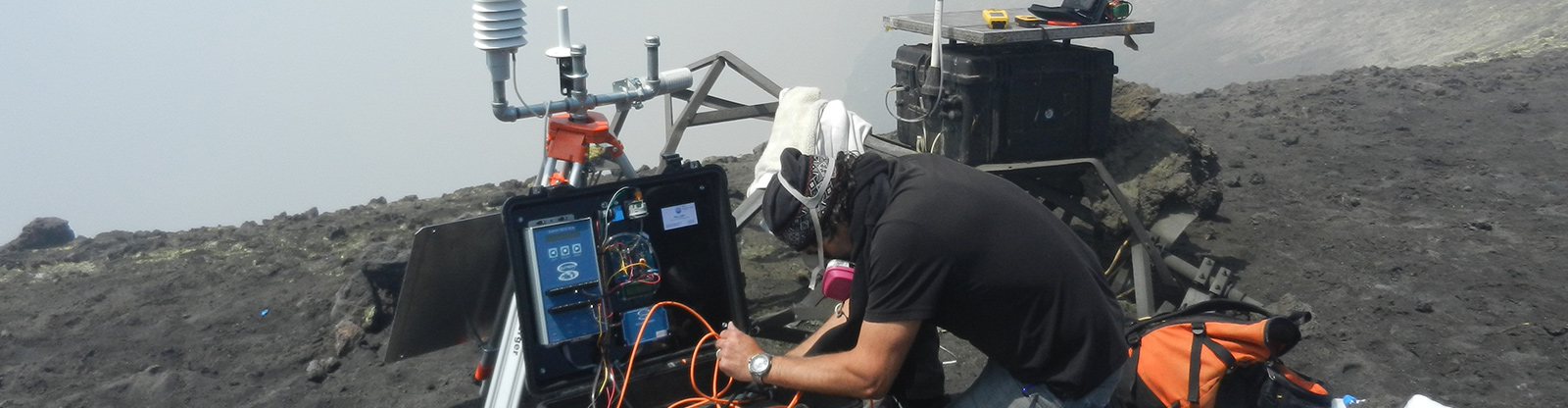
Brinson Early Career Fellowships are awarded to scientists who are leading important areas of inquiry and defining new frontiers with their research.
The Brinson Foundation began awarding Brinson Postdoctoral Fellowship grants to U.S. research institutions in 2020 to support postdoctoral scholars working at the forefront of their fields.
These awards are made to the Foundation’s existing grantees to support research in one of the Foundation’s four science focus areas: Astrophysics/Cosmology, Evolutionary Developmental Biology, Geophysics, and Medical Research.
The Foundation does not participate in the selection of these Fellows, rather individuals are selected by their host institution. Some Fellows have joint appointments between institutions.
The Foundation does not accept external inquiries regarding these awards.
Brinson Fellows – 2026

Hannah Barbian
Ph.D., Molecular Biology, University of Pennsylvania
Hannah Barbian’s scientific training and interest are in molecular virology and pathogen genomics. She received her PhD from the University of Pennsylvania with research focused on the fate of viruses upon transmission, immune pressure, and chronic infection. Barbian came to Rush University Medical Center as a postdoctoral researcher in 2018 with research focusing on latent viral infections. She joined the Regional Innovative Public Health Laboratory (RIPHL) at RUSH in 2021 as a genomic epidemiologist, performing genomic surveillance of pathogens of public health importance, including outbreak investigations and monitoring emerging pathogens. As an Assistant Professor, her current research is focused on understanding and surveilling pathogens using molecular and genomic analyses. In particular, she is interested in using environmental air surveillance as a means for pathogen case and genomic surveillance. This Brinson-funded project will explore and optimize the use of air sampling to characterize and monitor antimicrobial resistance. Monitoring antimicrobial resistance is crucial for detecting emerging pathogen threats, guiding clinical treatments, and informing public health actions to protect from untreatable infections.

Lauren Boland
M.D./Ph.D, Biomedical Engineering, University of Iowa
Dr. Boland’s research focuses on the development and monitoring of novel therapies for the treatment of pediatric brain tumors, specifically high-grade gliomas (pHGG) including diffuse midline gliomas, which are a devastating subtype of pHGG that result in death typically within 2 years of diagnosis. Currently, Dr. Boland is working to delineate how the immune system of a patient changes in response to a serially delivered neo-peptide vaccine that includes the 16 most common neo-epitopes present in diffuse midline gliomas, via a first-in-children phase 1 clinical trial. Through spectral flow cytometry and single cell RNA sequencing on patient samples before and after peptide vaccination, Dr. Boland is determining if there are immune signatures associated with positive response to vaccination to better understand how to harness the immune system to treat pHGG. Dr. Boland received her MD and PhD in Biomedical Engineering at the University of Iowa MSTP studying use of cell-based therapies for treatment of autoimmune and inflammatory diseases and later completed her Residency in Pediatrics at Ann and Robert H Lurie Children’s Hospital prior to starting her Brinson Medical Research Fellowship in Pediatric Hematology Oncology.
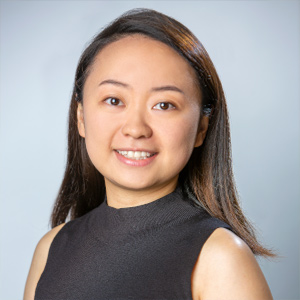
Cuncheng (Mandy) Chen
Ph.D., Astronomy and Astrophysics, University of Chicago
Mandy Chen’s research focuses on robustly characterizing the dynamics of the circumgalactic medium—the outermost, gaseous envelope of galaxies. This expansive gas reservoir dominates the baryonic mass of a galaxy, and records critical information about a galaxy’s past and ongoing interactions with the surrounding environment. As a Ph.D. student at the University of Chicago, Chen leveraged the recent advent of high-throughput integral field spectrographs and built the first spatially-resolved constraints on galactic outflows and CGM turbulence in distant galaxies. Using several different strong emission lines as tracers, she initiated and led investigations of gaseous halos surrounding galaxies with and without strong black hole accretion. As a Carnegie-Caltech Brinson Postdoctoral Fellow in Observational Cosmology, Chen harnesses data from ground-based integral field spectrographs on both Keck and Magellan combined with the burgeoning wealth of archival data from JWST/NIRSpec IFU to decode the complexities of turbulent motions in the circumgalactic medium across a wide range of physical scales and cosmic epochs.
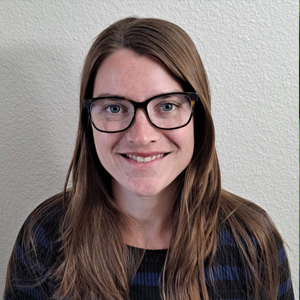
Maren Cosens
Ph.D., Physics, University of California, San Diego
Maren Cosens’ work in the Physics Department at the University of California, San Diego has been two-fold, with aspects of both observational astrophysics and the development of new instrumentation. Her observational research has been focused on using some of the largest ground-based telescopes in the world to study the properties of star-forming regions and the interplay between those regions and the galaxies in which they form. Namely, the factors that influence the way in which these regions develop, and the impact of the energy imparted to the galaxy through processes known as “feedback.” In addition to her observational research, she has also worked extensively on the development of new instruments, primarily working on the mechanical design for a next generation imager and an integral field spectrograph, Liger, for the W.M. Keck Observatory which will provide improvements in resolution and field-of-view, over existing instruments. During the term of her Brinson Postdoctoral Fellowship in Astronomical Instrumentation at the Carnegie Observatories, she continues to focus on both these areas of research, working on the development of the Magellan Infrared Multi-Object Spectrograph (MIRMOS), as well as utilizing the vast observational resources at Carnegie to expand her studies of star-forming regions to a broader range of environments.
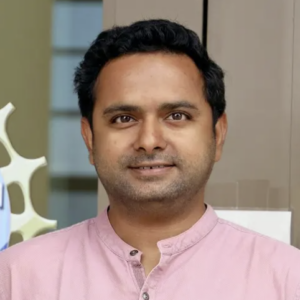
Soumyaranjan Dash
Ph.D., Solar Physics, IISER Kolkata, India
Soumyaranjan Dash’s research combines observations and theoretical modeling to study how magnetic fields evolve on the Sun and influence the surrounding space environment. By bringing together observations and simulations, his work helps reveal the physical processes that drive the Sun’s dynamic behavior and improves our ability to anticipate space-weather variations in our local space environment. Soumyaranjan earned his Ph.D. from IISER Kolkata, where he focused on predicting large-scale coronal magnetic structures using data-driven models for total solar eclipses. He subsequently worked as a Postdoctoral Fellow at the University of Hawai‘i at Mānoa. Now, as a Brinson Postdoctoral Fellow at the National Solar Observatory, Soumyaranjan is leveraging cutting-edge observations obtained during the 2024 total solar eclipse with the US NSF Daniel K. Inouye Solar Telescope (DKIST), alongside coordinated datasets from space-based and ground-based telescopes, to advance our understanding of the Sun’s outer atmosphere. In this role, he aims to investigate how magnetic forces work in the corona that motivates development of robust physics-based theoretical models of solar coronal magnetism.
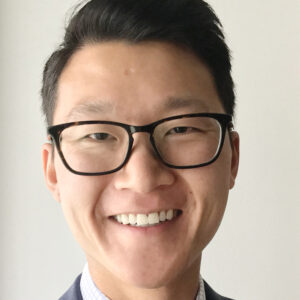
Samuel Dowling
M.D./Ph.D, Albert Einstein College of Medicine
Dr. Dowling studies how juvenile idiopathic arthritis (JIA), the most common pediatric rheumatologic condition and a major cause of childhood-onset joint damage, develops in children. He obtained his B.S. at Georgetown University and his M.D.-Ph.D. degree at Albert Einstein College of Medicine. In his current role as a Brinson Medical Research Fellow at Lurie Children’s Hospital and Northwestern University Feinberg School of Medicine, Dr. Dowling is building a biorepository of pediatric synovium, the tissue that lines the inside of the joint and is the main site of disease activity in JIA. Using these tissue samples, he is defining genetic signatures of synovial immune cells that may predict clinical outcomes and treatment responses for children with JIA. His overarching goal is to leverage immunogenomics toward the development of precision medicine approaches in JIA.
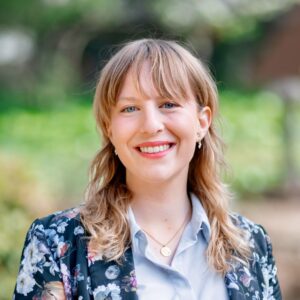
Maude Gull
Ph.D., Astrophysics, University of California, Berkeley
Maude Gull studies metal-poor massive stars in nearby galaxies. Metal-poor massive stars are at least eight times as heavy as our Sun and have a metallicity (a metal to an astronomer, is any element on the periodic table that is not Hydrogen or Helium) similar to that of the early universe. Across most of the universe, these stars dominate the light of star-forming galaxies and are progenitors to energetic and exotic astrophysical phenomena. Yet our knowledge of the life and death of these stars has been limited due to their rarity in the nearby universe. As a Ph.D. student at UC Berkeley, Gull conducted the largest quantitative analysis of metal-poor massive stars in the less than 10% solar metallicity regime, laying the groundwork to address this uncertainty and developing the tools for future large-scale studies. As a Carnegie-Caltech Brinson Postdoctoral Fellow, she plans to undertake a much-needed systematic study of metal-poor massive stars and their environments by combining data from HST, JWST, Magellan, and Keck. Gull’s study will focus on constraining the effects of rotation and binarity (presence of a gravitationally-bound companion) on the life and death of metal-poor massive stars. Aiming to provide insights into stellar physics, the study of high-redshift star-forming galaxies discovered by JWST, and pathways leading to transients and exotic remnants.
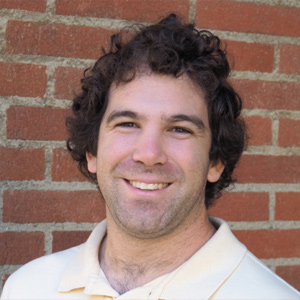
Matthew Hosek
Ph.D., Astronomy, Institute for Astronomy, University of Hawai’i at Manoa
Matt Hosek is currently an astronomy postdoc with the Galactic Center Group at UCLA. He completed his Ph.D. in 2018 at the Institute for Astronomy at the University of Hawai’i at Manoa under the direction of Professor Jessica Lu. His research focuses on the formation and dynamics of stars near the center of our Galaxy. As a Brinson Postdoctoral Fellow, Hosek uses data from the Hubble and James Webb Space Telescopes to develop a new reference frame to measure the orbits of stars near the Galactic Center with improved precision and accuracy. This will enable tests of General Relativity and probe the distribution of matter near the central supermassive black hole. He is also measuring the masses of stars in two young star clusters in the region in order to evaluate how the extreme environment near the Galactic Center impacts the physics of star formation.
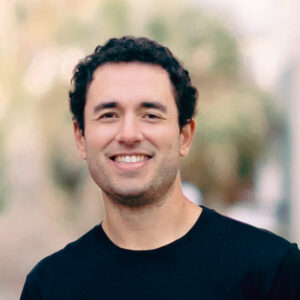
Ryan Kahn
Ph.D., Muscle Physiology, Australian Catholic University
Ryan Kahn studies how circadian rhythms, the body’s internal 24-hour biological clock, regulate skeletal muscle force production and repair. Specifically, his research focuses on circadian rhythms produced by muscle stem cells (MuSCs). MuSCs are responsible for facilitating muscle repair and adaptation following exercise/rehabilitation sessions and aligning these sessions to specific times of day when MuSCs repair-capacity may be enhanced holds great promise for improving musculoskeletal rehab outcomes. Using preclinical models, Kahn has shown that muscle force production and susceptibility to damage vary by time of day, driven by molecular “clocks” within muscle stem cells. These findings suggest that rehabilitation effectiveness may depend not only on how therapy is delivered, but when it is delivered. As a Brinson Stroke Research Fellow at Shirley Ryan AbilityLab, Kahn is translating these discoveries toward human studies, with the goal of identifying optimal times of day for rehabilitation that could enhance rehab outcomes for stroke patients.
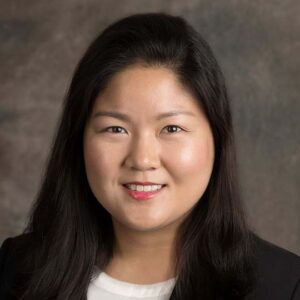
Ellis Kim
Ph.D., Pathology, University of Chicago; M.D., University of Chicago
Ellis Kim’s research focuses on characterizing the role of how immune cells affect heart function. Heart Failure can occur in the setting of relatively normal appearing heart function (called heart failure with preserved function). Chronic inflammation is thought to be one of the main drivers underlying this type of heart failure. Learning the exact mechanism through which immune cells mediate development this form of heart failure would enlighten additional treatment for a disease that has limited treatment options at this time. During her PhD, Kim worked on the defining molecular differences in subtypes of myotonic dystrophies using human stem cell models of these genetic diseases, which are known to affect the heart. As a Northwestern Brinson Medical Research Fellow, Kim’s research is examining immune cell profiles in patients with heart failure.
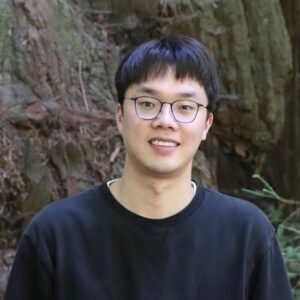
Cheng Mei
Ph.D., Geophysics, Nanyang Technological University
Cheng Mei’s research focuses on earthquake physics, induced seismicity, fault mechanics, and rock friction. His work integrates theoretical analysis, numerical modeling, and laboratory experiments to investigate fault mechanics and hydrothermal effects on both natural earthquakes and induced seismicity associated with engineering activities such as wastewater disposal, enhanced geothermal systems, and carbon storage. Injection-induced seismicity has become a significant concern in areas with active subsurface fluid injection, where wastewater disposal from oil and gas operations has led to a substantial increase in earthquake activity. While much of the attention has centered on the western and central U.S., particularly California and Oklahoma, rising volumes of fluid injection in the northeastern U.S., especially in Pennsylvania, Ohio, and West Virginia, have raised concerns about growing seismic hazards. The goal of his work as a Lamont Brinson Postdoctoral Fellow in Geophysics is to examine injection induced seismicity on rough faults, focusing on mainshock forecasting, poroelastic effects, and variability in fault orientations.
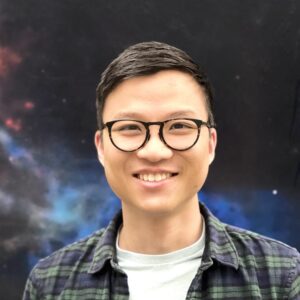
Geoffrey Mo
Ph.D., Physics, Massachusetts Institute of Technology
Geoffrey Mo studies compact stellar binaries, which produce exotic astrophysical objects, play crucial roles in stellar evolution, and are responsible for many of the most energetic events in the universe. During his Ph.D. at MIT in the LIGO Lab, he enabled multimessenger observations of these sources in both electromagnetic and gravitational waves. As a Carnegie-Caltech Brinson Postdoctoral Fellow, he will work to answer critical questions about the formation and evolution of compact binaries using time-domain observations of gravitational wave sources. In particular, he will use the Hubble Space Telescope in conjunction with ground-based observatories to characterize the compact binary population of globular clusters, which have dense cores which are predicted to be prolific factories of compact binaries. He will also look to improve the capabilities of powerful ground-based telescopes—particularly for studying compact binaries—by developing new multi-band imagers that take advantage of recent advances in image sensor technology to enable low-noise, high-speed characterization of these binary systems.
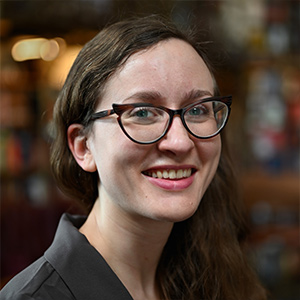
Stella Ocker
Ph.D., Astronomy, Cornell University
Stella Ocker studies the diffuse gas between stars and galaxies, the interstellar and intergalactic media that fuel galaxy and star formation. She works to map the distribution of cosmic gas extending all the way from the solar neighborhood to distant galaxies. As a Ph.D. student at Cornell University, Ocker was a Guest Investigator on the Voyager Interstellar Mission, where she discovered a new plasma wave signature that has enabled high-resolution density mapping of the very local interstellar medium. She has also used distant radio sources, including neutron stars and fast radio bursts, to probe cosmic gas in a wide range of astrophysical environments. As a Carnegie-Caltech Brinson Postdoctoral Fellow in Observational Cosmology, Ocker synthesizes state-of-the-art optical and radio surveys, including the Sloan Digital Sky Survey V and the Deep Synoptic Array, to build a distance ladder for using fast radio bursts as probes of the universe’s large-scale structure. Ocker also continues to be a member of the North American Nanohertz Observatory for Gravitational Waves, which uses pulsar timing to search for gravitational waves from supermassive black holes.
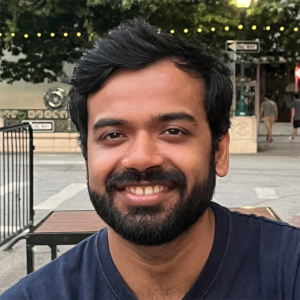
Sunil Simha
Ph.D., Astronomy and Astrophysics, University of California, Santa Cruz
Sunil Simha’s research uses Fast Radio Bursts (FRBs) as probes of matter in the universe. FRBs are flashes of radio light that frequently occur all over the sky daily. Using sensitive radio telescopes, astronomers can detect and pinpoint their locations to distant galaxies from which they originate. Due to their unique millisecond-duration flash, they offer an exciting new window to matter in the universe. Most of the matter, a.k.a. baryons, in the universe is present in a highly diffuse and ionized state, a plasma, which makes them difficult to detect. However, FRBs are dispersed when propagating through this plasma, much like sunlight is dispersed by raindrops to make a rainbow. Measuring this dispersion accurately tells us exactly how much matter the FRB has traveled through, thus directly detecting them. As a NU-UChicago Brinson Postdoctoral Fellow in Astrophysics, Simha’s research combines the information obtained through FRBs with 3D optical maps of the foreground universe to place novel constraints on plasma distribution around and between galaxies. This technique complements other probes of matter in the universe to give us a much more complete picture of the cycle of baryons between galaxies and their environments.
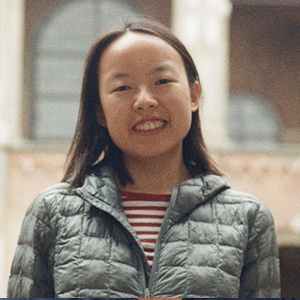
Junwen Xiong
Ph.D., Physics, University of California, Berkeley
As a Brinson Postdoctoral Fellow in Experimental Quantum Cosmology, Junwen Xiong works on the development of next-generation dark matter detectors using superconducting quantum sensors to collect and measure the crystal acoustic vibrations (“phonons”) created by a particle interaction. These detectors will enable the search for much lighter dark matter, potentially helping to identify the dark matter and solving this major mystery of the universe.
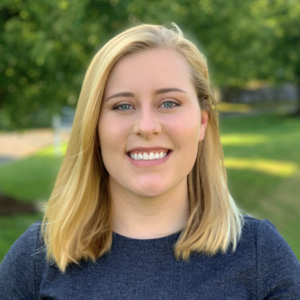
Brianna Zawadzki
Ph.D., Astronomy and Astrophysics, Pennsylvania State University
Brianna Zawadzki uses radio interferometers to study the planet-forming environments around stars other than the Sun. She completed her Ph.D. in Astronomy & Astrophysics at Pennsylvania State University in 2023, where she used simulations, observations, and machine learning techniques to better characterize disks of gas and dust in the early stages of planet formation. As a Brinson Postdoctoral Fellow at Wesleyan University, Zawadzki analyzes new observations of debris disks from the Atacama Large Millimeter/submillimeter Array (ALMA) to search for signs of planets and probe the diverse morphologies of these disks. She also continues to develop novel, machine learning based imaging techniques to aid in the acquisition of ultra high resolution interferometric images. This work will help astronomers understand how planets form in greater detail than ever, complementing the thousands of recent exoplanet detections from missions like Kepler and TESS. In addition to her research, Zawadzki enjoys communicating science to the general public through a wide range of outreach events; she spent several years serving as a local organizer of Astronomy on Tap, an organization which brings public astronomy talks to restaurants and breweries, and frequently contributes to a variety of other science events sponsored by universities and public libraries.
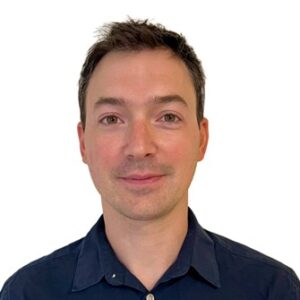
David Zemmour
Ph.D., Immunology, Harvard University
David Zemmour’s research focuses on directly measuring cellular interactions in human tissues to better understand immune responses. He does this by studying T cells and Regulatory T cells known as Tregs. The immune system consists of millions of cells spread throughout the body, working together to respond to injuries, and Tregs play a unique and crucial role in preventing autoimmune diseases, as was celebrated with the 2025 Nobel Prize in Physiology and Medicine. Dr. Zemmour is currently investigating the role that Tregs play in the onset of immune checkpoint inhibitor (ICI) colitis, which is a significant autoimmunity side effect of cancer treatment. His goal is to uncover the underlying mechanisms of dysfunction of these Tregs during immunotherapy, with the goal of learning how to prevent it in the future.
Previous Early Career Fellows
Brinson Fellows – 2025
Amin Aminaei
Ph.D., Communication Systems, Lancaster University, UK
Eric Beaucé
Ph.D., Geophysics, Massachusetts Institute of Technology
Juliana Cherston
Ph.D., Aerospace Sensor Systems, MIT Media Lab
Anirudh (Ani) Chiti
Ph.D., Physics, Massachusetts Institute of Technology
Ryan French
Ph.D., Solar Physics, UCL Mullard Space Science Laboratory
Yuya Kusuki
Ph.D., Physics, Yukawa Institute for Theoretical Physics, Kyoto University